
© South African National Defence Force
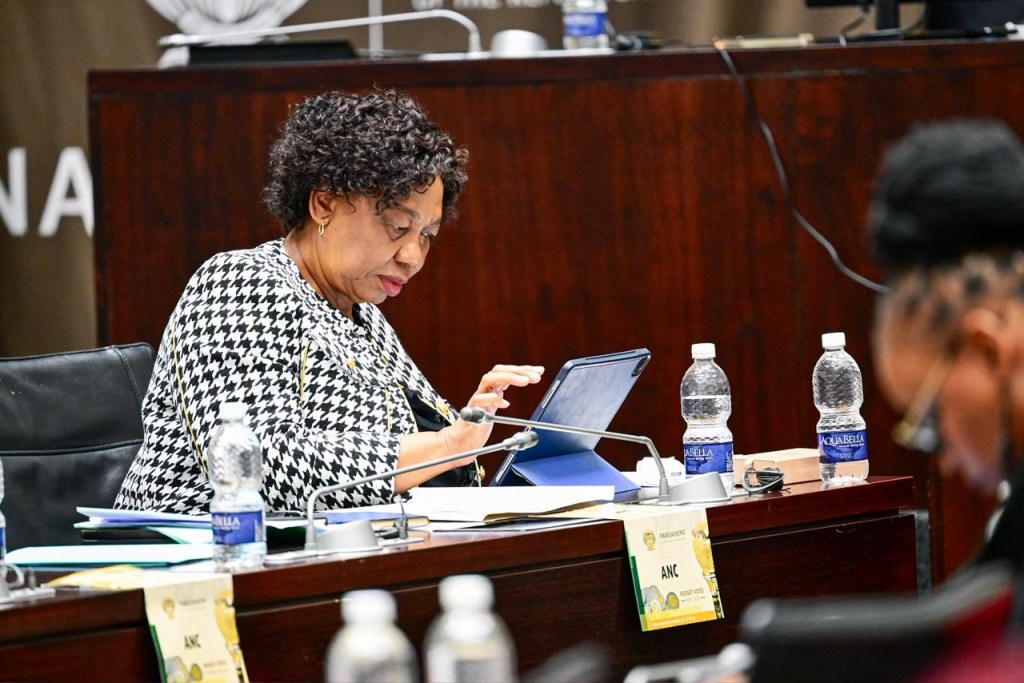
South African Defence Minister Angie Motshekga presented the 2026/27 Defence Budget Vote 23 to the National Assembly on 20 May 2026, outlining the strategic priorities, funding pressures and operational challenges facing the Department of Defence and the South African National Defence Force (SANDF).
The Department of Defence has been allocated R57.605 billion for the 2026/27 financial year. Of this, R37.7 billion is allocated to compensation of employees, highlighting the continuing pressure of personnel costs on the defence budget. Key allocations include R2.5 billion for the SA Army, R2.7 billion for the SA Air Force, R1.9 billion for the SA Navy, R1.5 billion for the Military Health Services, R4.5 billion for Logistics, and R1.5 billion for Joint Operations. Additional earmarked funds include R557 million for border safeguarding technology and vehicles, R427 million for maintaining Air Force fighter capability, R607 million for Navy platform repairs, R80 million for uniforms, R1.5 billion for ARMSCOR, and R150 million to support the 2026 local government elections.
Motshekga stressed that South Africa’s defence establishment remains mandated to protect the Republic, its people, sovereignty and constitutional order. However, she warned of a persistent misalignment between the SANDF’s mandate, public expectations and available funding. The government has approved a long-term defence planning framework, including the Long-Term Force Evolution Strategy, based on a minimum funding threshold of 1.5% of GDP to ensure operational viability.
The Minister highlighted growing maritime security concerns, particularly the strategic importance of the Cape Sea Route as global shipping traffic increases. She argued that the Navy is a strategic necessity and that neglecting maritime capability would risk national and global relevance. The Navy continues to face dockyard and platform maintenance challenges, although progress has been made through the acquisition of three Multi-Mission Inshore Patrol Vessels and deployments such as SAS Amatola’s participation in Exercise MILAN 2026.
Border safeguarding remains a major priority. The SANDF is moving towards intelligence-led operations supported by sensors, radar and UAVs, but mobility is constrained by ageing patrol vehicles and poor infrastructure. The Air Force also faces shortages in helicopter availability, radar systems and air traffic control infrastructure. The SANDF is increasingly being used for domestic security tasks, including support to the police against gang violence, illegal mining and organised crime. An additional R823 million will support these internal operations. At the same time, South Africa is withdrawing from some regional peace support operations due to pressure on the force.Human resource rejuvenation is another key focus. The department will use early retirement programmes, maintain annual Military Skills Development intakes and expand youth development through the South African National Service Institute. Motshekga also addressed governance failures, qualified audits and irregular expenditure, promising stronger consequence management. Defence digitisation, industry localisation, ARMSCOR reform, Denel stabilisation and the upcoming Defence Industry Lekgotla were presented as central to rebuilding sovereign defence capability.
She also presented the Military Veterans Budget Vote 26, amounting to R912 million, mainly for socio-economic benefits, healthcare, pensions, housing, education and administration.


Leave a Reply