© 2026 AFRICOM
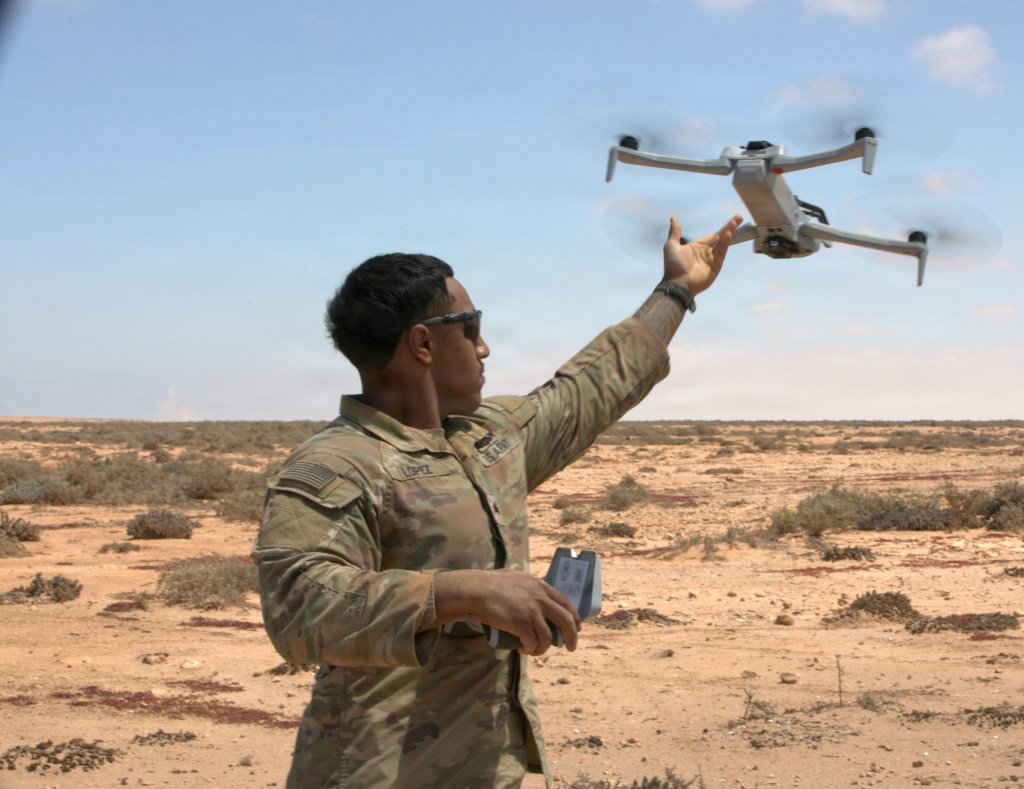
U.S. Soldiers assigned to the 1st Battalion, 503rd Infantry Regiment, 173rd Mobile Brigade Combat Team (Airborne), conducted autonomous tactical vehicle training during African Lion 26 at Cap Draa, near Tan-Tan, Morocco. The training enabled service members to test artificial intelligence-powered and autonomous platforms in attack, defence and mission command scenarios. This activity formed part of wider efforts to examine how emerging technologies can support modern operations, reduce risks to personnel and expand the operational reach of deployed forces.
According to U.S. Army 1st Lt. Ethan Burdette, officer in charge of the training and assigned to the 173rd MBCT, the exercise provided an opportunity to move beyond theory and assess how autonomous systems can be integrated into realistic tactical situations. The training focused on accelerating the sensor-to-shooter process, shortening decision-making timelines and delivering scalable, cost-effective solutions for contemporary battlefield requirements. In modern operations, speed, precision and information-sharing are increasingly decisive. Autonomous systems can help commanders gather data, process information more rapidly and distribute it across formations and partner forces.
The exercise also highlighted the growing importance of multinational cooperation in adapting to new technologies. U.S. Army Pfc. David Pomeroy, a combat engineer assigned to the 173rd MBCT, noted that training with partners and allies allows militaries to learn from one another and remain prepared as the character of warfare continues to evolve.
African Lion 26 is U.S. Africa Command’s largest annual joint exercise. Led by U.S. Army Southern European Task Force, Africa, the exercise is designed to strengthen collective security capabilities among the United States, African nations and global allies.
Running from 20 April to 8 May 2026, the multinational training takes place across Ghana, Morocco, Senegal and Tunisia. It involves more than 5,600 civilian and military personnel from over 40 nations, reinforcing interoperability and enhancing cooperation among U.S., African and allied forces. The autonomous systems training in Morocco demonstrated how advanced technologies may contribute to shared security objectives, particularly by improving situational awareness, supporting faster decision-making and reducing exposure of soldiers in high-risk environments.
For U.S. and partner forces, African Lion 26 offers not only a platform for tactical training, but also an opportunity to test future-oriented capabilities in a multinational environment. As Lt. Burdette emphasized, working alongside partners helps ensure that such technologies remain adaptable, relevant and aligned with common regional security challenges.


Leave a Reply