
© Leonardo 2026
Leonardo and Baykar have successfully completed the first phase of live flight testing for the K-SWARM programme, marking a significant milestone in the development of advanced Crewed-Uncrewed Teaming (CUC-T) capabilities and future collaborative combat operations.
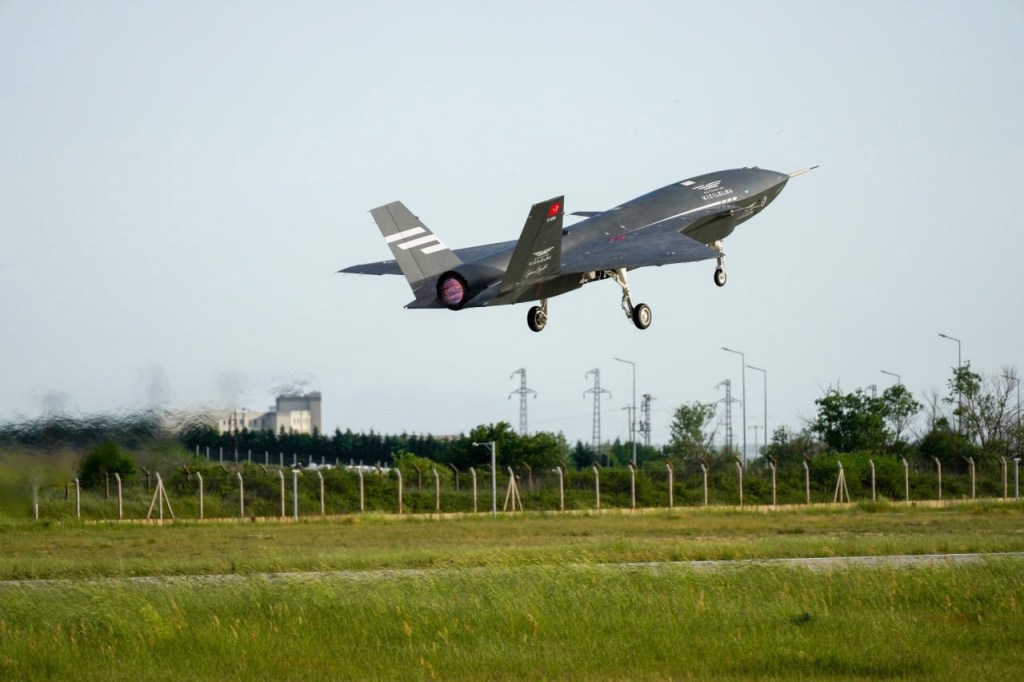
The trials, conducted in May at Baykar’s flight test centre in Çorlu, Türkiye, involved two Leonardo M-346 aircraft and a Bayraktar KIZILELMA unmanned fighter aircraft. The testing campaign demonstrated the ability of crewed and uncrewed platforms to operate together autonomously in coordinated formations, validating advanced algorithms, communication systems, and operational procedures developed jointly by the two companies.
The flight tests represent the transition of the K-SWARM programme from simulation-based development to real-world flight operations. The programme aims to design and develop interoperability between crewed and uncrewed aircraft, a capability increasingly viewed as a key component of future combat air systems.
During the trials, the Bayraktar KIZILELMA autonomously conducted taxiing, take-off, and rejoining procedures before integrating with the Leonardo M-346 Fighter Attack aircraft. Using advanced Smart Fleet Autonomy algorithms developed by Baykar, the unmanned aircraft successfully joined formation with the crewed platform and responded to commands issued by the M-346 pilots.
A newly developed integrated onboard avionics suite enabled pilots aboard the M-346 to command various formations and manoeuvres, which were then autonomously executed by the KIZILELMA through a dedicated crewed-uncrewed computing system. The aircraft successfully performed a range of coordinated actions, including position changes, formation adjustments, separations, and rejoins.
Leonardo’s contribution focused on the development of advanced algorithms, tactics, and procedures through its Avionic and Flight Control Innovation Laboratories and its PC2LAB capability development centre in Turin. The work was linked with an M-346 Full Mission Simulator in Venegono, Italy, enabling extensive testing and validation before live flight operations.
A secure radio-frequency data exchange system synchronized information between the aircraft, while Leonardo’s GCC Tactical Platform provided real-time cyber protection, monitoring, and command-and-control capabilities throughout the testing campaign.
According to the companies, the extensive preparation phase involved pilots, engineers, and technicians from both organizations working together over several months to achieve the required level of technical integration and operational readiness. The resulting trials successfully validated collaborative operations between high-performance combat aircraft and advanced unmanned systems.
The data collected during the campaign will support the next phase of the K-SWARM programme, which will focus on increasingly complex missions requiring enhanced situational awareness and higher levels of cooperation among multiple assets operating toward shared objectives.
The successful completion of the first live trials highlights the growing strategic partnership between Leonardo and Baykar and demonstrates their combined expertise in advanced aerospace technologies. The programme represents an important step toward the future of combat aviation, where crewed and uncrewed platforms will operate together seamlessly in multidomain operational environments.


Leave a Reply