
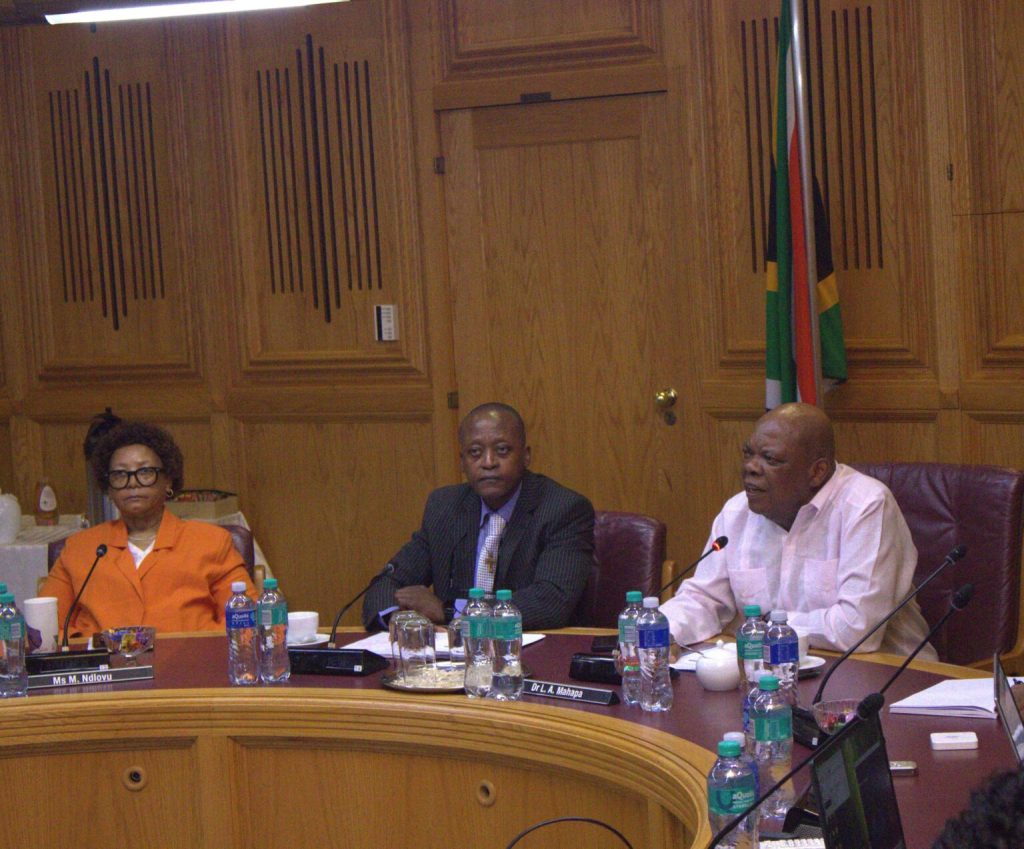
The Armaments Corporation of South Africa (Armscor) is mandated to provide cutting-edge defence acquisition, logistics, and research support to the SANDF and other clients.
Armscor and Denel have reaffirmed their commitment to closer cooperation following an inaugural joint board meeting aimed at strengthening South Africa’s defence industrial capacity. The engagement brought together two state-owned enterprises with complementary responsibilities: Armscor manages defence acquisition and projects, while Denel provides manufacturing and technological capabilities. According to an Armscor statement, the meeting was the first of its kind since Cabinet responsibility for Denel returned to the Ministry of Defence and Military Veterans in August 2024. Both organisations now fall under Minister Angie Motshekga, creating a shared oversight framework for addressing challenges affecting the defence sector and its industrial base.
The relationship between the companies reflects the evolution of South Africa’s defence industry. Established in 1968 as an arms production organisation, Armscor transferred its manufacturing, production and research facilities to Denel in April 1992. Their distinct mandates nevertheless remain closely connected, particularly where military procurement depends on domestic engineering and production capacity. Armscor board chair Dr Lesiba Mahapa, Denel interim board chair Tshidi Mokgabudi and Secretary for Defence Bereng Mthimkhulu attended the meeting. Discussions centred on the organisations’ respective challenges, the need for funding and the importance of practical cooperation in supporting the South African National Defence Force’s operational requirements.
Mthimkhulu emphasised that Armscor and Denel are structurally interdependent and essential to maintaining sovereign defence capability. He urged both organisations to protect South Africa’s defence technology and limit dependence on foreign countries, identifying cooperation as an important part of rebuilding strategic capabilities that have been lost. The statement framed the meeting as a step towards a relationship based on open communication, mutual respect and practical solutions. This places the emphasis on how the two organisations coordinate their responsibilities, rather than simply on their shared government ownership. Effective collaboration would connect acquisition priorities with the industrial capabilities needed to deliver and sustain military equipment.
Mahapa stressed that national security requires institutions to work towards a common purpose, reaffirming Armscor’s role as a strategic acquisition agency supporting the SANDF’s constitutional responsibilities. Mokgabudi similarly placed national interests and military requirements at the centre of Denel’s contribution, describing the engagement as an opportunity to combine the organisations’ capabilities and support a sustainable defence industry. Both board representatives highlighted funding among the challenges confronting their companies. Their statements established a shared direction, although the account did not identify new financing arrangements or binding implementation measures. Progress will therefore depend on translating institutional cooperation into workable decisions on projects, resources and delivery.
The boards also received updates on key projects, with Project Hoefyster the only programme identified publicly. Intended to provide new infantry fighting vehicles to replace the Army’s ageing Ratels, the programme remains a prominent example of the sector’s delivery difficulties: the supplied account states that no new vehicles have reached the Army, 19 years after the development contract was concluded. The meeting ended with agreement to maintain engagement and explore practical areas of cooperation. Its significance will ultimately rest on whether that commitment helps resolve longstanding obstacles and supports a more capable, sustainable and responsive South African defence industry.


Leave a comment